The information on this website is general in nature and does not take into account your objectives, financial situation, or needs. Consider seeking personal advice from a licensed adviser before acting on any information.
Public liability insurance can help construction businesses manage third-party injury and property damage risks. Learn what it may cover, what is commonly excluded, and how certificates of currency work in Australia.
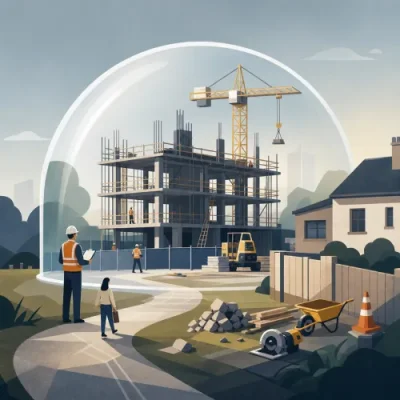
Public liability insurance is one of the core forms of cover for Australian construction businesses because building sites can create risks for clients, visitors, neighbouring properties and other third parties. For builders, contractors and subcontractors, it is often requested before work starts and may be required under project contracts, site access rules or tender conditions.
This guide explains what construction public liability insurance is generally designed to cover, how it differs from other construction insurance policies, what a certificate of currency is, and what to consider when reviewing cover. It is general information only and does not take into account your business, contracts, licences, locations or risk profile.
What is public liability insurance for construction businesses?
Public liability insurance is designed to respond to certain claims made by third parties alleging that your business activities caused personal injury, death or property damage. In construction, those claims might arise from work performed on a building site, at a client's premises, during deliveries, or in connection with tools, materials and temporary site conditions.
For many businesses, public liability sits within a broader construction business insurance program. It is not a complete risk-management solution by itself, but it can be an important part of protecting a business against liability exposures that may otherwise be costly to defend or settle.
What does construction public liability insurance usually cover?
The exact cover depends on the policy wording, insurer, occupation, project type and any endorsements or exclusions. However, public liability insurance for builders and contractors commonly focuses on the following types of third-party claims.
Third-party personal injury
A policy may respond if a member of the public, client, site visitor or another third party alleges they were injured because of your business activities. Examples may include someone tripping over materials left in an unsafe position, being struck by falling debris, or being injured due to inadequate site controls.
The policy may cover compensation payable for a covered claim, as well as certain legal costs, subject to the policy terms, limit of indemnity and excess.
Third-party property damage
Construction work can affect neighbouring buildings, client property, fixtures, services, vehicles or other assets. Public liability insurance may respond where a third party alleges your work caused damage to their property.
Examples might include accidental damage to a client's existing structure, damage to nearby property during site works, or damage caused by materials, tools or equipment associated with the job. Cover will depend on the circumstances and policy wording.
Legal defence costs
Even where a claim is disputed, legal expenses can be significant. Public liability policies commonly include cover for certain defence costs and investigation expenses associated with a covered claim. These costs may be included within, or paid in addition to, the policy limit depending on the insurer and policy structure.
Products liability where included
Some public liability policies also include products liability cover, which may be relevant if your business supplies, installs, modifies or sells products, materials or components. For construction businesses, this could be relevant where a product or completed installation is alleged to have caused injury or property damage.
Products liability can be complex, especially where your business imports products, manufactures components, relies on supplier specifications or performs installation work. The policy wording should be checked carefully.
Common construction scenarios where public liability may matter
Public liability insurance builders and contractors arrange may be relevant in a wide range of day-to-day site situations. Examples include:
- a visitor trips over unsecured materials at a residential renovation site;
- a subcontractor's activity damages a neighbouring property or common area;
- tools, temporary fencing or site materials cause damage to a third party's property;
- water ingress from building work damages a client's existing property;
- a member of the public is injured near a work area due to inadequate barriers or signage;
- an installed item is alleged to have caused injury or damage after completion.
These examples are general only. Whether a claim is covered depends on the facts, the insured business activities, policy conditions, exclusions, notifications and insurer assessment.
What public liability insurance usually does not cover
Public liability insurance is not designed to cover every risk faced by a construction business. Common exclusions or limitations may include:
- Injury to employees: employee injury is generally handled through workers compensation arrangements, subject to state and territory rules.
- Damage to your own tools, plant or equipment: this may require separate cover such as tools, equipment or plant insurance.
- Damage to the construction works themselves: contract works insurance is commonly used for damage to the project during construction.
- Professional advice or design errors: professional indemnity insurance may be needed where design, consulting, certification, project management or professional advice exposures exist.
- Defective workmanship itself: policies may exclude the cost of redoing, repairing or replacing your own defective work, although resulting third-party damage may be treated differently depending on the wording.
- Motor vehicle accidents: vehicle-related liability is usually addressed through compulsory third party and commercial motor policies.
- Fines, penalties and some statutory liabilities: insurance generally does not cover all regulatory penalties or intentional breaches.
- Pollution, asbestos, demolition, excavation or high-risk work: these may be excluded, restricted or require specific acceptance by the insurer.
- Assumed contractual liability: liability accepted under a contract may not be covered if it goes beyond what the business would otherwise be legally liable for.
Because exclusions can significantly affect claims outcomes, construction businesses should read the policy wording rather than relying only on a summary or premium comparison.
Public liability, contract works, workers compensation and professional indemnity compared
Construction liability insurance Australia-wide is often discussed alongside other policies, but each cover has a different purpose. The table below outlines the broad differences.
| Policy type | Primary purpose | Typical construction relevance |
|---|
| Public liability insurance | Responds to certain third-party injury or property damage claims | Site visitors, clients, neighbours and other third parties affected by business activities |
| Contract works insurance | Covers certain loss or damage to construction works during a project | Fire, storm, theft or accidental damage to the works, subject to policy terms |
| Workers compensation | Covers eligible employee workplace injury claims under state or territory schemes | Employees injured during construction work |
| Professional indemnity insurance | Responds to certain claims arising from professional advice, design or services | Design, engineering input, certification, consulting or project management exposures |
For a broader overview of policy types, see the guide to key construction insurance policies Australian businesses should consider.
Who may need contractor public liability insurance?
Many construction businesses consider public liability insurance, including:
- licensed builders and building companies;
- carpenters, plumbers, electricians and other trades;
- civil works contractors;
- demolition, excavation and earthmoving contractors;
- renovation and maintenance contractors;
- subcontractors working under head contractors;
- sole traders who work on client sites;
- businesses tendering for commercial, government or strata projects.
Whether cover is required may depend on licensing rules, contractual obligations, principal contractor requirements, site access conditions and the nature of the work. Some clients or head contractors may require a particular limit of indemnity or specific business description before allowing work to proceed.
What is a public liability certificate of currency?
A public liability certificate of currency is a document issued by an insurer or broker confirming key details of an active insurance policy at the time it is issued. It is commonly requested by clients, project principals, head contractors, councils, landlords or site managers.
A certificate of currency may include details such as:
- the insured business name;
- the insurer and policy number;
- the policy period;
- the type of cover;
- the limit of indemnity;
- the business activities or occupations noted;
- any relevant interests or locations, where applicable.
A certificate of currency is not the full policy wording and does not guarantee that every claim will be accepted. It is evidence that a policy exists, but the actual cover is still governed by the policy terms, exclusions, conditions and claims assessment.
How much public liability cover does a construction business need?
There is no single limit that suits every builder or contractor. The appropriate level of cover depends on factors such as the size of projects, contract requirements, type of work, site conditions, subcontractor use, turnover, locations, previous claims history and the potential severity of third-party injury or property damage.
When considering a limit of indemnity, construction businesses may need to review:
- minimum limits required by contracts, tenders or head contractors;
- whether work is residential, commercial, industrial or civil;
- the value and proximity of surrounding property;
- the likelihood of public access near the site;
- whether subcontractors carry their own cover;
- high-risk activities such as excavation, demolition, hot works or work at height;
- policy excesses, sub-limits and exclusions;
- whether products liability is included and adequate for the business activities.
A higher limit may increase the premium, but a lower limit may leave a business exposed if a large claim exceeds the available cover. The decision should be based on risk and contractual obligations, not premium alone.
Information insurers may ask for when quoting
When applying for construction public liability insurance, insurers or brokers may request information to assess the risk. This may include:
- business structure and ABN details;
- trade or occupation description;
- annual turnover and wage estimates;
- number of employees and subcontractors;
- types and values of projects undertaken;
- locations and states or territories of operation;
- use of subcontractor agreements and insurance checks;
- claims history;
- details of high-risk activities;
- licences, qualifications or industry memberships where relevant.
Accurate disclosure is important. If business activities are understated or a high-risk activity is not disclosed, it may affect whether cover applies to a future claim.
Questions to ask before choosing a policy
When comparing public liability insurance builders or contractors are considering, it can help to ask practical questions rather than focusing only on price:
- Are all of the business activities accurately listed?
- Does the policy cover the types of sites and projects you work on?
- Are subcontractors treated as insured parties, or do they need separate cover?
- Are there exclusions for height, depth, demolition, excavation, asbestos, welding or hot works?
- Is products liability included?
- Are defence costs included within the policy limit or in addition to it?
- What excess applies to property damage or injury claims?
- Can certificates of currency be issued quickly when required?
- Does the policy meet contractual requirements for current and upcoming projects?
- What changes must be reported during the policy period?
Construction insurance can be highly dependent on the occupation and work performed. Where the wording is unclear, consider discussing the policy with an insurer or a qualified broker. You can also use the brokers page to understand how broker support may assist with policy assessment and documentation.
How public liability fits into construction risk management
Insurance is not a substitute for safe systems of work, site supervision, compliance with work health and safety duties, or careful contract management. Insurers may also expect businesses to maintain reasonable risk controls and comply with policy conditions.
Useful risk-management steps may include:
- maintaining clear site access controls and signage;
- recording safety checks and toolbox talks;
- checking subcontractor licences and certificates of currency;
- using written contracts that reflect the actual scope of work;
- documenting variations, site conditions and client instructions;
- keeping incident records and notifying potential claims promptly;
- reviewing cover when project type, turnover or activities change.
These practices may reduce the chance of disputes and help provide information if a claim occurs. They do not guarantee cover or claim acceptance, but they can support better risk governance.
Key takeaways
Public liability insurance for construction businesses in Australia is generally designed to help manage third-party injury and property damage claims arising from covered business activities. It may also cover certain legal defence costs, subject to the wording and policy limits.
However, it is not the same as contract works insurance, workers compensation, professional indemnity or motor insurance. Builders, contractors and subcontractors should check the policy wording, disclose their actual work activities, understand exclusions and keep certificates of currency current for projects that require them.
The right approach depends on your business structure, contracts, licences, project risks and insurer criteria. If in doubt, seek professional guidance before committing to a policy.
Published: Friday, 18th Sep 2026
Author: Paige Estritori






No comments yet. Be the first to share your thoughts.