

Construction Insurance Online :: News
SHARE

Share this news item!

ICA Calls for Investment in Hard Mitigation Infrastructure Amid Disaster Fund Applications

Enhancing Community Resilience Through Strategic Construction Projects

ICA Calls for Investment in Hard Mitigation Infrastructure Amid Disaster Fund Applications?w=400

The information on this website is general in nature and does not take into account your objectives, financial situation, or needs. Consider seeking personal advice from a licensed adviser before acting on any information.

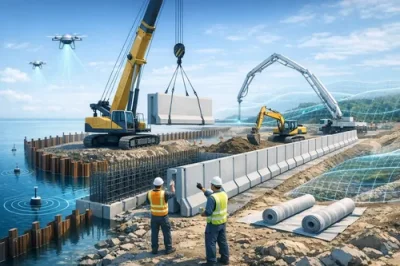
The Insurance Council of Australia (ICA) is advocating for a strategic focus on hard mitigation infrastructure as the federal government's Disaster Ready Fund opens its fourth round of applications.
With up to $142.5 million available, the ICA emphasises the importance of investing in physical projects that directly reduce disaster risks.

Hard mitigation infrastructure includes:

  • Levees: Structures designed to prevent flooding in vulnerable areas.
  • Flood Barriers: Installations that protect communities from rising water levels.
  • Other Physical Projects: Initiatives aimed at fortifying communities against natural disasters.

By prioritising these projects, the ICA aims to address the protection gap and enhance community resilience. The council has long advocated for the Disaster Ready Fund to be a rolling, ongoing program, providing the certainty governments and communities need to plan and deliver mitigation infrastructure at scale.

Construction businesses have a pivotal role in this initiative. Engaging in hard mitigation projects not only contributes to community safety but also opens avenues for new contracts and partnerships. Moreover, such projects can influence insurance premiums by reducing the risk profile of insured properties.

As applications are submitted, collaboration between construction firms, insurers, and government agencies will be essential. By working together, stakeholders can ensure that investments are directed towards projects with the most significant impact on disaster resilience.

Published:Friday, 5th Jun 2026
Author: Paige Estritori

Please Note: We do not endorse any specific products or companies. Some content is sourced from third parties, including press releases, and may not be independently verified for accuracy or completeness.

Share this news item:

Rate this article

0 Comments

No comments yet. Be the first to share your thoughts.

Insurance News

Falls From Height Are Back in Focus for Construction Risk
08 Sep 2026: Paige Estritori
Renewed regulatory and industry attention on falls from height is a timely warning for Australian builders, subcontractors and project managers. While falls are usually discussed as a work health and safety issue first, they also sit squarely inside the insurance conversation because a serious incident can trigger workers compensation claims, public liability exposure, contractual disputes, investigation costs and reputational damage. - read more
Why Slower Building Approvals Can Become an Insurance Issue
01 Sep 2026: Paige Estritori
Australia’s latest building approvals commentary has again highlighted a difficult reality for the construction sector: the national housing task is ambitious, but the project pipeline remains uneven. Industry groups have pointed to approvals volatility, planning delays and capacity constraints as continuing barriers to lifting housing supply at the pace governments want. - read more
Workers Compensation Costs Are Back on the Construction Risk Agenda
25 Aug 2026: Paige Estritori
Workers compensation is again moving from a payroll administration issue to a strategic insurance concern for construction firms. Recent attention on state scheme performance, premium settings and claims pressure is a timely reminder that builders and contractors cannot treat statutory cover as separate from the rest of their risk programme. - read more
Code Changes Are Turning Construction Documentation Into an Insurance Issue
18 Aug 2026: Paige Estritori
The latest movement around the National Construction Code is a reminder that regulatory change is not only a technical issue for designers, certifiers and site teams. For builders, developers and specialist contractors, code compliance increasingly sits beside contract wording, site safety and claims history as a factor that can shape insurance outcomes. - read more
Why Construction Insolvencies Are Now an Insurance Issue
11 Aug 2026: Paige Estritori
Australia's construction insolvency problem is again moving from a balance-sheet story to an insurance story. Fresh insolvency data and industry commentary continue to show builders and specialist trades among the most exposed sectors, with pressure coming from thin margins, fixed-price contracts, late payments, labour shortages and materials costs that are still difficult to absorb. - read more


Professionals Insurance Articles

Navigating Construction Insurance: Key Policies Every Business Should Consider
The Australian construction industry is a dynamic and essential part of the national economy. As it grows, so does the complexity and number of compliance requirements aimed at ensuring safety and sustainability. Among these is the critical area of insurance compliance, a cornerstone of risk management for any construction business. - read more
Staying Compliant: Understanding Insurance Obligations in the Construction Industry
Insurance compliance is a cornerstone of operating successfully within the construction industry. It ensures that businesses adhere to legal standards while safeguarding their projects and employees. Ignoring these obligations can result in hefty fines and damage to a company’s reputation. Thus, staying compliant is not just a legal duty but a smart business strategy. - read more
The Role of Cyber Insurance in Safeguarding Construction Companies
The construction industry is undergoing a digital transformation, embracing technology to streamline operations, enhance project management, and improve efficiency. As construction companies integrate digital tools, they also expose themselves to new cyber risks that were less of a concern in the past. - read more
Exploring Contract Works Insurance: What Construction Firms Need to Know
Contract Works Insurance is a pivotal coverage for businesses in the construction industry. This type of insurance is designed to protect building works against damage or loss during construction. It bridges the gap between starting a project and completing it, providing financial security in case something unexpected occurs. Whether it's a fire, theft, weather damage, or accidental damage during building, Contract Works Insurance has you covered. - read more
NSW Construction Compliance Update: Professional Indemnity Insurance Requirements from 1 July 2026
The NSW construction industry is approaching a major compliance milestone. From 1 July 2026, a registered building practitioner in NSW must be indemnified under an insurance policy for work they carry out in that capacity. This change sits within the broader compliance framework established under the Design and Building Practitioners Act 2020 (NSW) and supporting regulation, which have progressively lifted accountability standards across building and construction work in the state. - read more

Knowledgebase
Loss of Use:
Insurance coverage that pays for the additional living expenses if your home is uninhabitable due to a covered loss.